
2026 Top Car Engine Parts for Global Buyers?
The 2026 market for car engine parts is becoming more demanding, competitive, and specification-driven. Global buyers now compare durability, compatibility, delivery reliability, and technical support. A polished product image is no longer enough. They want clear dimensions, material details, testing records, and stable supply.
Engine-building legend Smokey Yunick said, “The only substitute for cubic inches is more cubic inches.” His memorable line highlights performance, but modern buyers must look beyond displacement. A forged piston, timing chain, oil pump, cylinder head, or turbocharger should match the engine’s exact application. Brand reputation matters. So do machining tolerances, heat resistance, packaging quality, and documented quality control. One small mismatch can cause vibration, oil leakage, or expensive engine damage.
This guide examines the top car engine parts for global buyers in 2026. It considers parts for passenger vehicles, commercial fleets, performance applications, and replacement markets. Supplier experience also matters, especially when products cross borders and vehicle specifications vary. Buyers should verify part numbers, engine codes, warranty terms, certifications, and after-sales support before ordering. Regional emissions rules may also affect acceptable components.
The selection is not flawless. Some high-priced parts may offer little practical advantage. Some affordable parts perform well under moderate conditions. A catalog can still mislead. Real workshop feedback remains valuable. Careful buyers should compare laboratory claims with field experience, installation records, and long-term failure patterns. That balance creates more reliable purchasing decisions, not simply a longer parts list.
What Are Car Engine Parts and Why Do They Matter?
2026 Top Car Engine Parts for Global Buyers
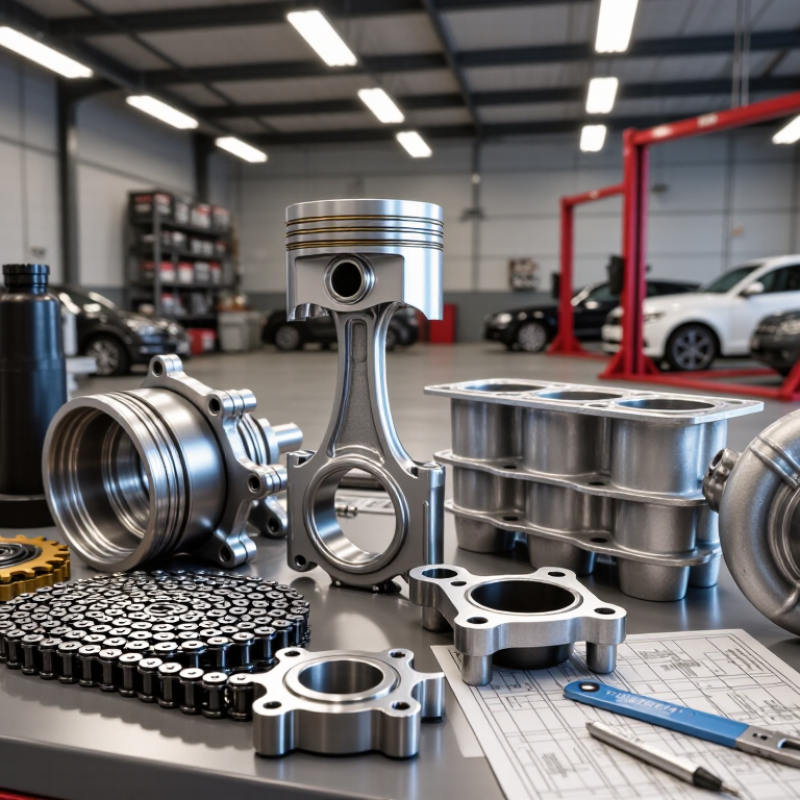
Car engine parts are the working pieces that create, control, and support engine power. Pistons move inside the cylinders and transfer force to the crankshaft. Valves manage air intake and exhaust flow. The cylinder head helps seal pressure and guide combustion. Smaller parts matter too. Gaskets prevent leaks, while oil pumps protect moving surfaces from damaging friction.
These parts affect fuel use, engine strength, noise, and service life. A weak gasket can cause coolant loss and overheating. Poorly machined bearings may create vibration within a short period. From my experience reviewing replacement components, accurate dimensions matter more than attractive packaging. Buyers should check material quality, tolerance data, heat treatment, and compatibility with the engine code. Independent inspection and batch traceability also improve purchasing confidence. Still, choosing only by price remains common. That choice can become expensive.
Tips: Match every part with the engine code, model year, and required specifications. Request inspection records, hardness results, and dimensional reports. Confirm packaging protects sealing surfaces during overseas transport. Ask a qualified technician to verify fit before installation. A small measurement error can stop a complete repair.
2026 Top Car Engine Parts for Global Buyers? - What Are Car Engine Parts and Why Do They Matter?
A practical comparison of major engine components, their functions, materials, failure symptoms, and international purchasing checkpoints
| Engine Part | Primary Function | Common Materials | Why It Matters | Typical Failure Indicators | Key Buyer Checks for 2026 |
|---|---|---|---|---|---|
| Cylinder Block | Forms the main structural housing for cylinders, crankshaft bearings, oil passages, and coolant passages. | Cast iron or aluminum alloy, often with steel cylinder liners where required. | Provides the foundation for combustion, lubrication, cooling, and crankshaft alignment. | Coolant or oil leakage, low compression, cylinder wear, cracks, or abnormal bottom-end noise. | Confirm engine code, bore size, liner configuration, casting integrity, machining tolerances, and corrosion protection. |
| Cylinder Head | Contains combustion chambers, valves, ports, camshaft supports, and coolant passages. | Aluminum alloy or cast iron with hardened valve-seat inserts. | Controls airflow and combustion sealing while transferring heat to the cooling system. | Overheating, coolant loss, white exhaust smoke, misfires, warped mating surfaces, or reduced compression. | Check flatness, pressure-test results, valve-seat condition, port configuration, and compatibility with the head gasket. |
| Pistons | Move within the cylinders to convert combustion pressure into mechanical motion. | Forged or cast aluminum alloy, with steel or other alloy inserts in selected applications. | Directly influence compression, power output, fuel consumption, and heat transfer. | Piston slap, oil consumption, scoring, damaged crowns, knocking, or loss of compression. | Verify diameter, compression height, pin diameter, ring-groove dimensions, weight matching, and application code. |
| Piston Rings | Seal combustion gases, control engine oil, and transfer heat from the piston to the cylinder wall. | Cast iron or steel with wear-resistant coatings depending on the ring position. | Maintain compression and help prevent excessive oil entering the combustion chamber. | Blue exhaust smoke, blow-by, high oil consumption, low compression, or carbon buildup. | Confirm ring thickness, end gap requirements, coating, installation orientation, and cylinder-wall compatibility. |
| Connecting Rods | Connect pistons to the crankshaft and transmit reciprocating force. | Forged steel, powdered-metal steel, or aluminum alloy in specialized designs. | Must withstand high tensile, compressive, and cyclic loads at changing engine speeds. | Deep knocking, excessive bearing clearance, bent rod, vibration, or catastrophic engine damage. | Check center-to-center length, small-end and big-end diameters, weight balance, bolt specification, and straightness. |
| Crankshaft | Converts piston movement into rotational power delivered to the drivetrain. | Forged steel, cast iron, or nodular iron depending on engine design and load level. | Determines engine balance, stroke, durability, and smooth power transmission. | Bearing noise, vibration, oil-pressure loss, journal scoring, or excessive crankshaft runout. | Measure journal diameters, taper, ovality, runout, fillet condition, balancing features, and undersize requirements. |
| Main and Rod Bearings | Provide controlled low-friction surfaces between the crankshaft and its supporting components. | Steel backing with copper-based or aluminum-based bearing layers and overlay materials. | Maintain oil-film separation and protect precision-machined journals from direct contact. | Low oil pressure, metallic particles in oil, tapping sounds, or accelerated journal wear. | Select the correct grade and size, verify oil-hole placement, crush height, locating tabs, and clearance specifications. |
| Camshaft | Opens and closes intake and exhaust valves at precisely timed intervals. | Hardened cast iron or forged steel, often with surface treatments for wear resistance. | Controls valve timing, engine breathing, torque characteristics, and emissions performance. | Rough idle, misfires, reduced power, tapping noise, or incorrect valve lift. | Confirm lobe profile, journal dimensions, timing position, sensor targets, and compatibility with the valve train. |
| Valves and Valve Springs | Regulate intake-charge entry and exhaust-gas exit while maintaining combustion-chamber sealing. | Heat-resistant steel or stainless steel valves; alloy steel springs. | Affect airflow, compression, operating speed, fuel efficiency, and exhaust temperature control. | Misfire, compression loss, valve-train noise, burned valves, or valve float at high speed. | Check stem diameter, head diameter, overall length, seat angle, spring pressure, installed height, and material grade. |
| Timing Chain or Timing Belt | Synchronizes crankshaft rotation with camshaft and, where applicable, other engine-driven components. | Heat-resistant steel chain components or reinforced rubber belt with embedded tensile cords. | Maintains valve timing; failure can cause severe internal contact in interference engines. | Rattling, timing faults, hard starting, misfires, visible belt cracking, or sudden engine stoppage. | Confirm tooth or link count, pitch, width, tensioner compatibility, guide condition, and complete-kit contents. |
| Oil Pump | Circulates engine oil to bearings, valve-train components, pistons, and other lubricated areas. | Aluminum or iron housing with steel gears, rotors, or gerotor elements. | Protects moving parts from friction, wear, and heat generated during operation. | Low oil-pressure warning, bearing noise, overheating, or accelerated component wear. | Verify flow and pressure specifications, pickup compatibility, relief-valve design, drive mechanism, and priming requirements. |
| Water Pump | Circulates coolant between the engine, radiator, and heater circuit. | Aluminum or cast-iron housing with composite, stamped-steel, or molded impeller. | Maintains operating temperature and prevents localized overheating. | Coolant leakage, bearing noise, overheating, pulley wobble, or damaged impeller. | Check impeller design, rotation direction, seal quality, gasket type, pulley dimensions, and corrosion resistance. |
| Head Gasket | Seals combustion pressure, engine oil, and coolant between the cylinder head and block. | Multi-layer steel, composite materials, or specialized sealing layers. | Preserves separation between high-pressure combustion gases and fluid passages. | Coolant in oil, combustion gases in coolant, overheating, external leaks, or compression loss. | Match bore opening, thickness, bolt pattern, sealing technology, surface finish requirements, and torque procedure. |
| Intake and Exhaust Manifolds | Distribute intake air to cylinders and collect exhaust gases for downstream treatment. | Aluminum or composite intake materials; cast iron or heat-resistant steel exhaust materials. | Influence airflow balance, throttle response, exhaust temperature, and emissions-system operation. | Air or exhaust leaks, poor acceleration, hissing, ticking, rough running, or emissions faults. | Verify port shape, flange flatness, sensor openings, heat resistance, gasket fit, and clearance in the target vehicle. |
Global Buyer Selection Priorities
Match engine family, model year, displacement, fuel type, emissions configuration, and engine code.
Request dimensional inspection, material data, hardness results, pressure testing, and batch traceability where applicable.
Review applicable technical specifications, packaging labels, installation instructions, warranty terms, and export documents.
Evaluate minimum order quantity, lead time, spare-part availability, protective packaging, customs classification, and landed cost.
Related Posts
-

Understanding Engine Parts: How They Function Together for Optimal Performance in Your Vehicle
-

What is Parts Engine and How Does it Function?
-

China Top Engine Parts Manufacturers and Their Global Impact
-
China Top 10 Engine Parts Suppliers for Global Buyers
-
Best Car Engine Tips for Maximum Performance and Longevity
-
2026 How to Improve Car Engine Performance Efficiently?